

How one couple discovered that Adult ADHD and attachment trauma — not a lack of love — had been quietly highjacking their relationship. And how they found their way back to each other.
Please note: All identifying details in this case study have been changed to protect client privacy. “Ella” and “Marco” are composite, fictional names. This story is shared to help prospective clients recognise their own experiences and understand what the therapeutic process can look like.
Before any formal session, I offer every prospective client a free 15-minute introductory Zoom call. No commitment, no pressure — just a chance for them to get a feel for whether I’m the right fit, and for me to get a sense of what’s going on for them – again, to be sure I am the best therapist for this couple.
Ella joined on time with a prepared list of questions — she wanted to understand my approach, my qualifications, and my experience with complex relationships. Marco joined a few minutes late, calling in from his car. Something had come up, he hadn’t made it home in time. He was easy-going about it but I saw Ella stiffen and frown a little when Marc’s busy energy came on the screen.
During that brief call I gently raised the question of whether neurodivergence might be part of the picture. Marco laughed — “Ella and my mates are always saying I’m ADHD!” Before we finished, I sent them my Relationship-Focused Adult ADHD Questionnaire. It’s a useful starting point — it begins to shift things from blame to understanding before therapy has even started if neurodivergence is part of the picture.
It was an easy chat – I felt Marco’s relief at being seen and understood and Ella relax a little with my explanations of Adult ADHD’s potential impact on their relationship. I left the decision with them as to whether or when they booked with me – I felt comfortable knowing I could definitely support them in improving their relationship.
New clients complete intake forms before their first session. It’s how I begin to understand each person’s perspective — their history, what isn’t working, what they’re hoping for. Often I can start to see the relational dynamic taking shape before we’ve even met properly.
Ella’s form was detailed and clearly took some time. Marco’s arrived late and was fairly brief. Already I could see the pattern — strong ADHD indicators in Marco’s presentation, signs of attachment anxiety running through Ella’s responses. Two people in the same relationship, experiencing it quite differently.
Because they’d completed the ADHD questionnaire together, something had already begun to shift by the time we met. A few conversations had happened at home. A bit less blame, a bit more curiosity. That questionnaire does useful work before therapy begins.
When the People Who Love Each Other Most Can’t Stop Hurting Each Other
Ella and Marco were childhood sweethearts — together since their final year of school. Ella went on to complete a law degree; Marco started university, didn’t enjoy it, and built his own creative business instead. They were, on the surface, quite different people — and that had once been a big part of the attraction.
His energy and spontaneity had been a breath of fresh air for Ella, whose life had always been shaped by responsibility. Her steadiness had been genuinely grounding for Marco — someone who could hold things together in a way his brain often struggled to. Over the years, those same qualities had become a source of friction. His spontaneity now read as unreliability. Her steadiness now read as control.
By the time they came to see me, they had two young children, a full life, and a marriage that had been under strain for some time. Ella was managing the household, the children, and a full-time legal career. Marco was putting a lot of energy into work and socialising — and finding home a harder place to be than it used to be.

MARCO – AT THE BEGINNING OF THERAPY
“I love her so much. But she’s always so angry — whatever I do is never right. So I just give up. I feel pretty shit, honestly, because I know I’m not being a good partner or a good dad.”
ELLA – AT THE BEGINNING OF THERAPY
“I feel so alone. I’m the only one holding everything together — the kids, the house, my job, all of it. It feels like he doesn’t love me anymore. Like he doesn’t even care.”
Sound familiar? If you’re nodding, keep reading. Because what Ella and Marco were describing wasn’t a lack of love. It wasn’t a character flaw in either of them. It was ADHD and trauma quietly hijacking their loving intentions — and running the relationship instead.
Neither Ella nor Marco came to therapy with a clear sense of how ADHD was shaping their relationship. Ella had wondered about it — Marco’s mates had mentioned it for years — but they had never properly explored it. What Marco did know, was that he felt like he was constantly behind, constantly getting it wrong without quite understanding why.
ADHD in relationships is about a lot more than losing focus or forgetting things. It involves time blindness — genuinely not sensing time the way others do. Emotional dysregulation — going from fine to overwhelm or rage in the blink of an eye. Then there is the disorganisation and impulse control – those struggles are real, not character flaws or laziness. And if that wasn’t enough, there’s the Rejection Sensitive Dysphoria (RSD) — where a concern raised by a partner about any one of these struggles, even a gentle raising, can register as stinging criticism before there’s any chance to think it through.
Marco had been gravitating towards the things that kept him going — engaging work, social connection, and novelty. Home had become a place where he felt he could rarely get things right anymore. His pulling away wasn’t deliberate. It was his nervous system looking for relief from ‘not feeling good enough’.
Ella had grown up in an immigrant family where the focus was very much on getting established in a new country. Her parents ran a restaurant; she helped out from a young age and often found herself translating and managing things well beyond her years. She worked hard at school, went on to study law, and had always been the person who kept things running. It was simply what she knew.
Her parents weren’t bad people — they were doing their best under real pressure. But there wasn’t much room for emotional connection, and Ella had grown up doing a lot on her own. In therapy language, she was parentified — carrying adult responsibilities from a young age. That experience had quietly shaped the way she moved through her adult relationships too.
When Marco forgot something, chilled on the coach, or spent the weekend with friends, it didn’t land for Ella as an ADHD moment. It landed as a familiar feeling — that she’d have to manage alone, that she wasn’t enough and that connection was tenuous. So she’d push to fix things. Not to cause an argument — but because her nervous system had learned that she had to fix things and be perfect to feel safe and loved.

RSD is very common in adults with ADHD. It’s an intense emotional response to the sense of being criticised or rejected — even when no criticism was intended. It’s not a choice or an overreaction. It’s neurological. And when one partner experiences RSD, the other can end up feeling like they’re walking on eggshells without really knowing why.
“Neither of them was the problem. ADHD and trauma were hijacking their loving intentions — and running the relationship instead.”
— Tess Reilly-Browne
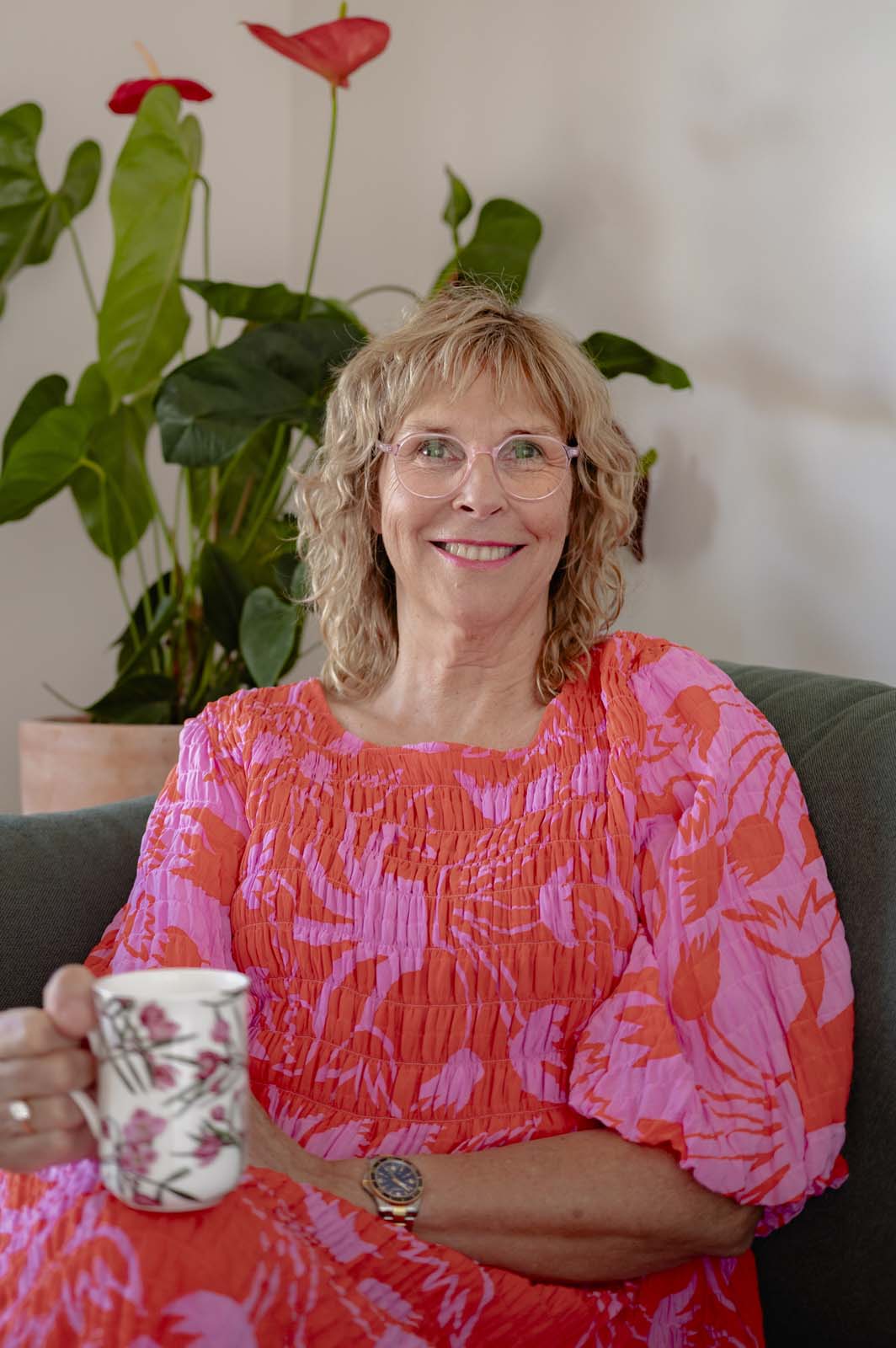
Help starts with a chat …
Marco says yes to a weekend party, forgetting Ella had already planned a family beach trip. Or he’s late home — got talking with a colleague. Or he’s on his phone on the couch after a long day, not quite present.
THE ADHD MOMENT
For Ella, this doesn’t land as an ADHD moment. It lands as a familiar feeling — she’s on her own again, she’s not a priority, . The hurt and frustration that surfaces isn’t really just about the beach trip. It’s older than that.
THE TRAUMA TRIGGER
Marco hears Ella’s frustration and RSD instantly kicks in. He feels the shame of it without the ability to unpack it. He snaps then is sullenly quiet lost in the overwhelm and confusion of his brain. None of which helps.
THE SHAME RESPONSE
Marco pulling back makes things worse for Ella — her nervous system reads anger and silence as a signal to try harder. So she pursues more. He withdraws more. Both are trying to manage feelings that have little to do with the original issue.
NERVOUS SYSTEMS IN FREE FALL
It ends in a day or two of distance and tension. Both feel alone and helpless. Neither quite understands how a small thing became such a big thing. And it happens again next time.
THE AFTERMATH
When Ella and Marco came to me, the work we did together was grounded in my trauma-informed relationship protocol, Tapping into Relationships — eft²® — a unique integration of Emotionally Focused Therapy (EFT) and Emotional Freedom Techniques (EFT Tapping), underpinned by the latest in neuroscience and somatic therapy.
EFT for couples is internationally recognised as one of the most effective approaches for reshaping deeply ingrained emotional patterns. It works not just at the level of thought, but at the level of felt experience — helping couples understand and change the emotional music playing beneath their interactions.
Tapping adds something that traditional talk therapy alone can’t always offer: a way to settle the nervous system in the moment, rather than just talking about it. For Marco, who could go from fine to overwhelmed quite quickly, having a practical tool to use mid-conflict made a real difference. For Ella, tapping helped her nervous system slow down enough to respond rather than react — something she’d rarely been able to do.

ELLA, MID-THERAPY
“I didn’t realise until Tess helped me see it — I wasn’t angry at Marco. I was scared. Scared I wouldn’t be enough for us to survive. That changed everything.”
MARCO, MID-THERAPY
“Learning to tap when I felt criticised or overwhelmed — it sounds simple. But it gave me a kind of calm I hadn’t felt before. I could stay in the conversation. And I started to understand what my shutting down had been doing to Ella.”
We also spent time on ADHD psychoeducation — not to explain away behaviour, but to give it context. Ella learning about RSD and time blindness wasn’t about lowering expectations. It was about seeing Marco more clearly, rather than through the filter of her own history. And Marco understanding his own nervous system gave him something he’d been missing for a long time — a reason that wasn’t just “I’m hopeless.”
Ella, true to form, practised the breathing and tapping daily. Her nervous system began to settle over time. She found herself less reactive, more able to stay curious rather than go straight to frustrated.
Ella and Marco worked with me over approximately eight weeks — weekly at first, then fortnightly, with some individual sessions woven in to tend to each of their personal histories. The change wasn’t linear. Real therapeutic change rarely is. But it was real.
They Could Identify the Relationship Dance
Instead of falling into reactivity, they learned to stop, breathe, and even tap together — calmly naming what was happening between them rather than being swept away by it.
They Understood the ADHD Brain
With self-awareness and nervous system tools, Marco could stay present rather than shut down or explode — and Ella no longer had to shout to be heard. This understanding also helped them better support their son.
They Found Safety
Ella learned to trust that an ADHD hiccup wasn’t abandonment. And Marco came to truly understand Ella’s inner world — that she wasn’t trying to control him. She was trying to feel safe.
They Found New Language
They developed a shared emotional vocabulary — naming feelings, making vulnerable requests, and choosing connection over combat. Communication became a bridge rather than a battleground.
Intimacy Came Alive Again
When each felt emotionally safer, the warmth — the humour, the tenderness, the physical closeness — that had always been there between them started to come alive again.
They Became a Team
With mutual understanding and practical strategies, ADHD went from a source of resentment to something they navigated together — even with occasional laughter at the chaotic moments.

“We’re not fixed — I don’t think relationships are ever fixed. But we’re finally on the same side. That’s what changed.”
— Ella, at the close of therapy
Ella and Marco booked a face-to-face session later in the year — just a check in and to make sure things were still on track.
If you’ve been reading this and quietly thinking — that’s us — I want you to know that you are far from alone. The combination of Adult ADHD and attachment trauma in couples is more common than most people realise, and it creates a particular kind of relational suffering that is often misdiagnosed as incompatibility, lack of effort, or even abuse
It isn’t any of those things.
You might recognise yourselves in Ella and Marco if:
It can change. With the right support — and the courage to turn towards each other rather than away — couples in exactly this situation find their way to something genuinely different. Not a perfect relationship (no such thing exists), but a connected, warm, emotionally safe one. One where both of you feel seen.
I’m Tess Reilly-Browne — a trauma-informed relationship counsellor with a particular love for the complex, the nuanced, and the deeply human. I specialise in Adult ADHD, AuDHD, and attachment trauma in relationships, and I’ve been walking alongside individuals, couples, and families through exactly this kind of work for many years.
What I’ve found, time and again, is that the couples who find their way to me aren’t struggling because they love each other too little. They’re struggling because they haven’t yet had the right map for the terrain they’re in. That’s what good therapy provides — not answers handed down from a great height, but a grounded, warm, genuinely useful space to understand yourselves and each other more deeply.
My approach — Tapping into Relationships — eft² — brings together the internationally validated Emotionally Focused Therapy model with the body-based nervous system regulation of Emotional Freedom Techniques (Tapping). It works at the level of the body, not just the mind — which makes it particularly powerful when ADHD or trauma is part of the picture.
I work face-to-face from Camberwell, Melbourne and Burrum Heads, Queensland, and online across Australia and internationally. If geography is the only thing standing between you and support, it doesn’t have to be.
Awarded among the Top 3 Counselling Services in Melbourne — 7 years running.